The Complete Guide to Growing Your Money in 2026: From $100 to Financial Freedom
You've heard the advice a thousand times: "Start saving early." "Invest your money." "Let compound interest work for you." But nobody tells you exactly what happens when you actually do it. How much does $100 a month really become? When does investing make more sense than saving? How long until your money starts working harder than you do?
This guide answers every one of those questions with real numbers. No vague promises. No theoretical hand-waving. We'll walk you through every stage of growing your money — from opening your first savings account to building a portfolio that could fund your retirement. Whether you have $100 or $100,000, the math works the same way. The only difference is where you start.
By the end, you'll understand exactly how money grows, which strategies fit your situation, and what decisions will have the biggest impact on your financial future. Let's start with the fundamentals.
Growing your money comes down to three levers: how much you save, what return you earn, and how long you let it compound. A high-yield savings account at 4.5% is the safest start. Index fund investing at 7-10% builds serious wealth over decades. The single most powerful factor is time — starting 10 years earlier can double your final wealth even with smaller contributions.

Want to see this in action?
Try our compound interest calculator to instantly estimate how your money grows over time — no signup required.
Part 1: The Foundation — Savings Accounts and Emergency Funds
Before you invest a single dollar, you need a financial foundation. That means an emergency fund in a savings account that you can access instantly. This isn't about maximizing returns — it's about protecting yourself from life's surprises so you never have to sell investments at the worst possible time.
How Much Should You Keep in Savings?
The standard advice is 3-6 months of essential expenses. If you spend $3,000 per month on rent, food, insurance, and utilities, that means $9,000 to $18,000 in an accessible savings account. If your income is variable (freelancer, commission-based), lean toward 6 months. If you have a stable salary, 3 months is a reasonable floor.
This money should sit in a high-yield savings account earning 4-5% APY. At 4.5%, a $15,000 emergency fund earns about $675 per year in interest — not life-changing, but it's free money for doing nothing. Compare that to a traditional bank account paying 0.01%, which would earn you $1.50. The difference is staggering.
What Happens If You Save $500 a Month?
Let's say you commit to saving $500 per month in a high-yield account at 4.5% APY. Here's what happens:
- After 1 year: $6,135 (you contributed $6,000; earned $135 in interest)
- After 3 years: $19,093 (contributed $18,000; earned $1,093)
- After 5 years: $33,288 (contributed $30,000; earned $3,288)
- After 10 years: $75,236 (contributed $60,000; earned $15,236)
At the 10-year mark, you've earned over $15,000 in interest alone. That's meaningful. But here's the honest truth: savings accounts won't make you wealthy. They're a safety net and a staging area. The real growth happens when you move money from savings into investments. Want to see your exact numbers? Use our savings calculator to model any scenario.
For a deeper dive into exactly what $500/month becomes, read our full breakdown: What Happens If You Save $500/Month for 10 Years?

Savings Account vs. CDs vs. Money Market
Not all "safe" options are equal. Here's how they compare right now:
- High-yield savings (4.0-5.0% APY): fully liquid, FDIC insured, no lock-up period. Best for emergency funds.
- Certificates of Deposit (3.5-4.5% APY): locked for 6-60 months, penalty for early withdrawal. Slightly lower rates than savings right now. Worth it only if you want forced discipline.
- Money market accounts (4.0-4.5% APY): similar to savings but may offer check-writing. Slightly less convenient for most people.
- Treasury bills (4.0-4.5%): government-backed, state tax exempt. Good for larger sums over $10,000.
For most people, a high-yield savings account is the right choice for your emergency fund. It's liquid, insured, and competitive on rates. Don't overcomplicate this step.
Part 2: The Engine — How Compound Interest Actually Works
Compound interest is the single most important concept in personal finance. It's simple in theory: you earn interest on your interest. But the practical implications are enormous — and most people dramatically underestimate how powerful it becomes over time.
Simple vs. Compound Interest: A Real Example
Imagine you invest $10,000 at 7% annual return.
With simple interest (you only earn on the original $10,000): After 30 years, you'd have $31,000. You earned $700 per year × 30 years = $21,000 in interest.
With compound interest (you earn on the growing balance): After 30 years, you'd have $76,123. That's $66,123 in gains — more than triple the simple interest amount. The difference? $45,123 of "interest on interest."
Use our simple interest calculator and compound interest calculator side by side to see this difference with your own numbers.

The Rule of 72: Your Mental Math Shortcut
Want to know how fast your money doubles? Divide 72 by your annual return rate. That's it.
- At 4% (savings): 72 ÷ 4 = 18 years to double
- At 7% (index funds): 72 ÷ 7 = 10.3 years to double
- At 10% (growth stocks): 72 ÷ 10 = 7.2 years to double
At 7%, your money doubles roughly every decade. That means $10,000 invested at age 25 becomes $20,000 by 35, $40,000 by 45, $80,000 by 55, and $160,000 by 65. Four doublings turned $10K into $160K. For the full breakdown, read How Fast Can You Double Your Money?
Why the Last Doubling Matters Most
Here's the counterintuitive reality: the first doubling ($10K → $20K) earns you $10,000. The fourth doubling ($80K → $160K) earns you $80,000. Each doubling is worth more than all previous doublings combined. This is why people who start investing in their 20s often end up with 2-3x more than people who start in their 30s — even if the late starters contribute more money.
Part 3: The Accelerator — Investing Your Money
Once your emergency fund is in place, every additional dollar should be working harder than a savings account allows. That means investing. But where? And how much risk should you take?
The Core Options Compared
Here's an honest comparison of the most common investment vehicles:
- Index funds (S&P 500): 7-10% average annual return. Low fees (0.03-0.10%). Diversified across 500 companies. The default choice for most investors.
- Total market funds: similar returns to S&P 500 but includes small and mid-cap stocks. Slightly more diversified.
- Bond funds: 3-5% returns. Lower risk, lower reward. Good for balancing a portfolio as you approach retirement.
- REITs (real estate): 8-12% historical returns with higher volatility. Good for diversification beyond stocks.
- Individual stocks: 0-20%+ returns depending on picks. High risk, requires research. Most people underperform index funds.
- Target-date funds: automatically adjust stock/bond ratio as you age. Truly hands-off investing.
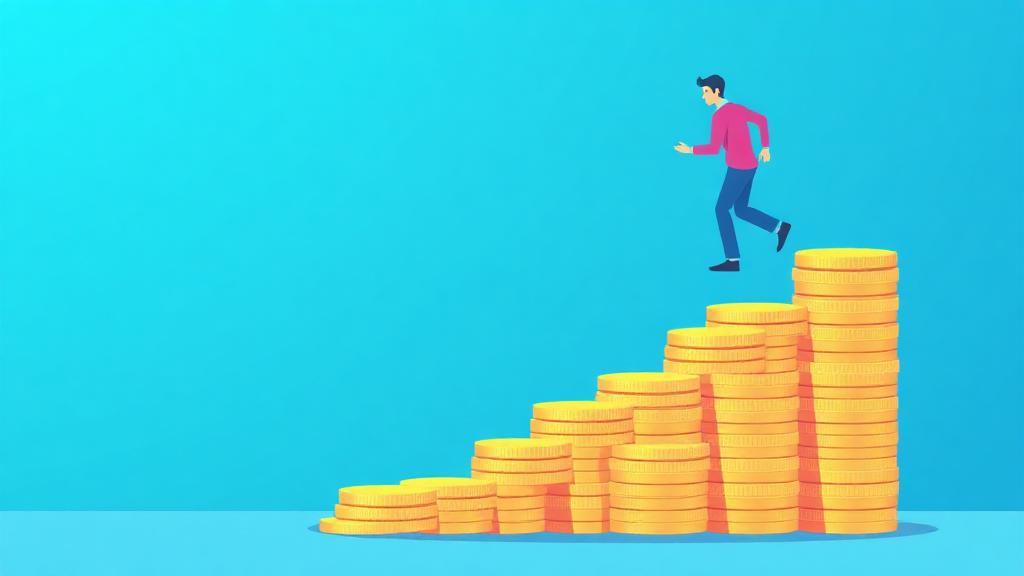
$100 vs. $1,000 per Month: What's the Real Difference?
Many people think you need thousands to start investing. You don't. But the amount you invest does matter enormously over time. Let's compare $100 and $1,000 per month at 7% over 30 years:
- $100/month: $36,000 contributed → grows to $121,997. You earned $85,997 in returns.
- $1,000/month: $360,000 contributed → grows to $1,219,971. You earned $859,971 in returns.
The person investing $1,000/month didn't just earn 10x more — they earned 10x more in compound returns too. Investing more doesn't just add linearly; it multiplies. But starting with $100 is infinitely better than starting with $0. Read the full comparison in $100 vs $1000 Investment: What's the Real Difference?
Model your own investment growth with our investment calculator .
The Cost of Waiting: What You Lose by Not Investing
Every year you delay investing costs you more than you think. Here's a stark comparison:
- Investor A starts at 25, invests $300/month for 40 years at 7%. Final balance: $791,957.
- Investor B starts at 35, invests $300/month for 30 years at 7%. Final balance: $365,991.
- Investor C starts at 35, invests $500/month for 30 years to "catch up." Final balance: $609,985.
Investor A contributed $144,000. Investor C contributed $180,000 — $36,000 more — and still ended up with $182,000 less. Time beats money. Every. Single. Time. For the full analysis, see How Much Do You Lose by Not Investing?
Part 4: Real Scenarios — What Your Money Actually Becomes
Theory is useful, but let's get concrete. Here are five common starting points and what actually happens over time.
Scenario 1: Fresh Graduate, $0 Savings, $200/Month
Age 22. Starting from zero. Can afford $200/month into a low-cost S&P 500 index fund returning 7% per year.
- By age 32 (10 years): $34,604
- By age 42 (20 years): $104,398
- By age 52 (30 years): $243,994
- By age 62 (40 years): $524,791
Total contributed: $96,000. Total gained from returns: $428,791. That's nearly 5.5x your money — all from $200/month and patience.
Scenario 2: Mid-Career, $50,000 Saved, $500/Month
Age 35. Has $50,000 already saved. Can invest $500/month at 7%.
- By age 45: $50K grows to $98,358 + contributions become $86,006 = $184,364
- By age 55: $50K grows to $193,484 + contributions become $260,489 = $453,973
- By age 65: $50K grows to $380,613 + contributions become $609,985 = $990,598
Nearly a million dollars by retirement. Total invested: $50,000 + $180,000 = $230,000. The other $760,000 is pure compound growth.
Scenario 3: Lump Sum Investor, $10,000 One-Time
You inherited $10,000 and want to invest it once, then never add another dollar. At 7% for 30 years:
$10,000 → $76,123. For the detailed year-by-year growth, read How Much Interest Can You Earn with $10,000?

Scenario 4: Aggressive Saver, $2,000/Month
High earner, age 30, investing $2,000/month at 8% (slightly more aggressive portfolio):
- By age 40: $364,896
- By age 50: $1,176,477
- By age 60: $2,935,636
Total contributed over 30 years: $720,000. Total returns: $2,215,636. At this level, compound interest contributes more than 3x what you put in. This is the mathematical case for maximizing your savings rate.
Scenario 5: Late Starter, Age 45, $1,000/Month
Starting late doesn't mean it's hopeless. $1,000/month at 7% for 20 years:
- By age 55: $173,085
- By age 65: $520,927
You contributed $240,000 and earned $280,927 in returns. Not as dramatic as starting at 25, but still enough to fund a meaningful retirement. The key is starting now, not waiting for the "perfect" time.
Part 5: The Hidden Destroyers — Fees, Inflation, and Taxes
Growing your money isn't just about what you earn. It's equally about what you don't lose. Three silent killers erode wealth over time.
Investment Fees: The 1% That Costs You Hundreds of Thousands
A 1% annual fee doesn't sound like much. But over 30 years, it's devastating:
- Low-cost index fund (0.05% fee): $500/month at 6.95% net return → $603,998
- Actively managed fund (1.0% fee): $500/month at 6.0% net return → $502,810
That 0.95% difference costs you over $100,000. Same market, same contributions, dramatically different outcome. Always check the expense ratio before investing. Target funds with fees under 0.20%.
Inflation: Your Invisible Tax
At 3% annual inflation, something that costs $100 today will cost $243 in 30 years. Your investments need to outpace this. A savings account earning 4.5% with 3% inflation gives you a real return of only 1.5%. An index fund earning 7% gives you a real return of 4%. This is why investing matters — savings accounts barely keep pace with inflation, while investments actually grow your purchasing power.
Taxes: Plan Ahead
In tax-advantaged accounts (401k, IRA, Roth IRA), your money compounds without annual tax drag. In taxable accounts, you may owe taxes on dividends and capital gains each year. The priority order for most people:
- Get full employer 401k match (it's free money)
- Max out Roth IRA ($7,000/year in 2026)
- Max out 401k ($23,500/year in 2026)
- Invest remainder in taxable brokerage account
Part 6: The Endgame — Can You Live Off Interest Alone?
The ultimate goal of growing your money: reaching the point where your portfolio generates enough income to cover your living expenses. This is financial independence.
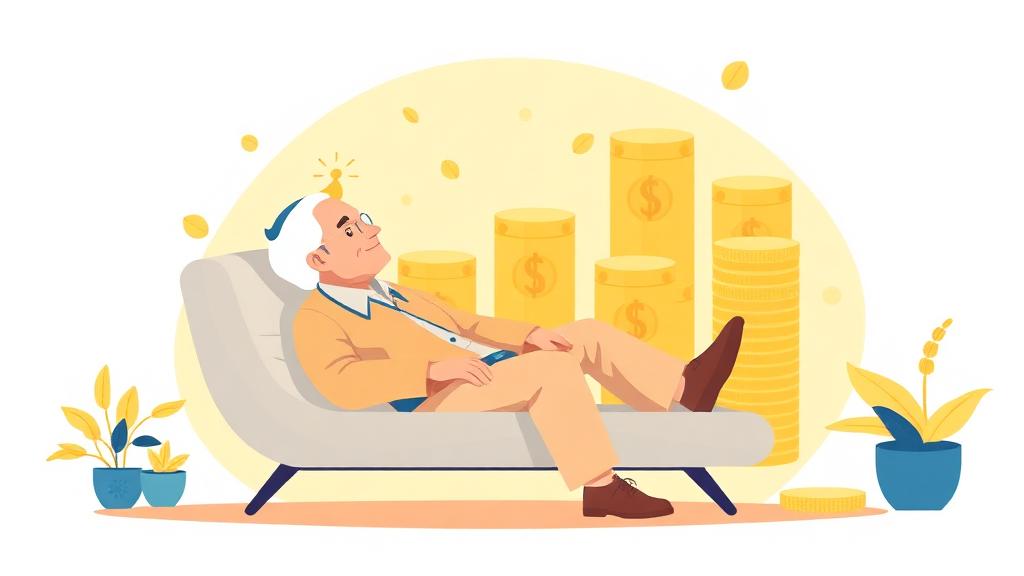
The 4% Rule
The most widely-used retirement guideline says you can withdraw 4% of your portfolio each year without running out of money over a 30-year retirement. That means:
- $500,000 portfolio: $20,000/year ($1,667/month)
- $750,000 portfolio: $30,000/year ($2,500/month)
- $1,000,000 portfolio: $40,000/year ($3,333/month)
- $1,500,000 portfolio: $60,000/year ($5,000/month)
- $2,000,000 portfolio: $80,000/year ($6,667/month)
To figure out your number: multiply your desired annual spending by 25. Need $50,000/year? You need $1,250,000. For the complete breakdown, read Can You Live Off Interest Alone?
How Long Does It Take to Reach Financial Independence?
Here's a rough timeline for reaching $1,000,000 at 7% annual returns:
- $500/month: ~30 years
- $1,000/month: ~24 years
- $2,000/month: ~18 years
- $3,000/month: ~15 years
The math is clear: your savings rate is the single biggest lever. Earning more, spending less, or both — whatever gets your monthly investment higher will dramatically accelerate your timeline.
Part 7: The 7 Biggest Money-Growing Mistakes
1. Keeping Too Much in Savings
Beyond your 3-6 month emergency fund, excess cash in savings accounts loses purchasing power to inflation. $50,000 sitting in savings for 10 years at 4.5% looks like growth — but at 3% inflation, your real gain is minimal. That same money invested could have doubled.
2. Timing the Market
Missing just the 10 best trading days over 20 years can cut your returns in half. Nobody consistently predicts the market. Dollar-cost averaging (investing a fixed amount each month) removes this risk entirely.
3. Paying High Fees
We showed the math above. A 1% fee costs you hundreds of thousands over a lifetime. Choose index funds with expense ratios under 0.20%. Avoid actively managed funds unless you have a compelling reason.
4. Not Starting Because "It's Not Enough"
$50/month at 7% for 40 years becomes $131,198. That's from just $24,000 in contributions. There is no amount too small to start with. The only amount too small is $0.
5. Panic Selling During Downturns
The S&P 500 has dropped 20%+ thirteen times since 1950. It recovered every single time. Investors who sold during the 2008 crash and didn't reinvest missed the longest bull market in history. Staying invested through volatility is the price you pay for long-term returns.
6. Ignoring Tax-Advantaged Accounts
Not maxing your 401k match is literally turning down free money. Not using a Roth IRA means paying taxes on gains you could have sheltered. Tax optimization can add 0.5-1.0% to your effective annual return — which, over 30 years, means tens of thousands of dollars.
7. No Plan, No Goal
"I should invest more" is not a plan. "I will invest $400/month into a total market index fund in my Roth IRA" is a plan. Specificity creates action. Use our calculators to set a concrete target and track your progress.

Part 8: Your Step-by-Step Action Plan
Here's exactly what to do, in order:
- Build your emergency fund. Open a high-yield savings account. Save 3-6 months of expenses. Use our savings calculator to set a timeline.
- Eliminate high-interest debt. Credit card debt at 20%+ APR grows faster than any investment returns. Pay it off first.
- Capture your 401k match. If your employer matches 50% up to 6% of salary, contribute at least 6%. That's an instant 50% return.
- Open a Roth IRA. Contribute up to $7,000/year. Choose a low-cost total market or S&P 500 index fund.
- Increase your 401k contributions. Work toward the $23,500 annual max over time.
- Invest additional savings. Open a taxable brokerage account for anything beyond retirement account limits.
- Automate everything. Set up automatic transfers so investing happens without willpower.
- Review annually, not daily. Check your allocation once a year. Rebalance if needed. Otherwise, leave it alone.
Key Takeaways
- Start with a safety net: 3-6 months of expenses in a high-yield savings account before investing
- Compound interest is exponential: the last doubling creates more wealth than all previous ones combined
- Time beats amount: starting 10 years earlier with less money often beats starting later with more
- Low fees matter enormously: a 1% difference in fees can cost $100,000+ over a career
- Index funds are the default: 80%+ of actively managed funds underperform the S&P 500 over 20 years
- The 4% rule defines your number: multiply your annual expenses by 25 to find your financial independence target
- Automate your investments: remove emotion and willpower from the equation
- Start now: the best time was 10 years ago; the second best time is today
Calculate Your Path to Financial Freedom
Every number in this guide was calculated using real compound interest math. Now it's your turn. Pick the calculator that fits your situation and see exactly what your money can become:
- Compound Interest Calculator — see how any amount grows over time
- Savings Calculator — model your emergency fund or savings goal
- Investment Calculator — project your portfolio growth with regular contributions
- Simple Interest Calculator — compare simple vs. compound returns
Frequently Asked Questions
The Bottom Line
Growing your money isn't complicated. It requires three things: saving consistently, investing wisely, and giving compound interest time to work. The math doesn't care about your income level, your background, or whether you know the difference between a stock and a bond. It only cares about how much you put in, what return you earn, and how long you let it grow. Start where you are. Use the calculators on this site to set your targets. Automate your plan. Then let the math do the heavy lifting — it's been working for centuries and it's not going to stop now.
Found this useful?
Share it with someone who should start investing today.